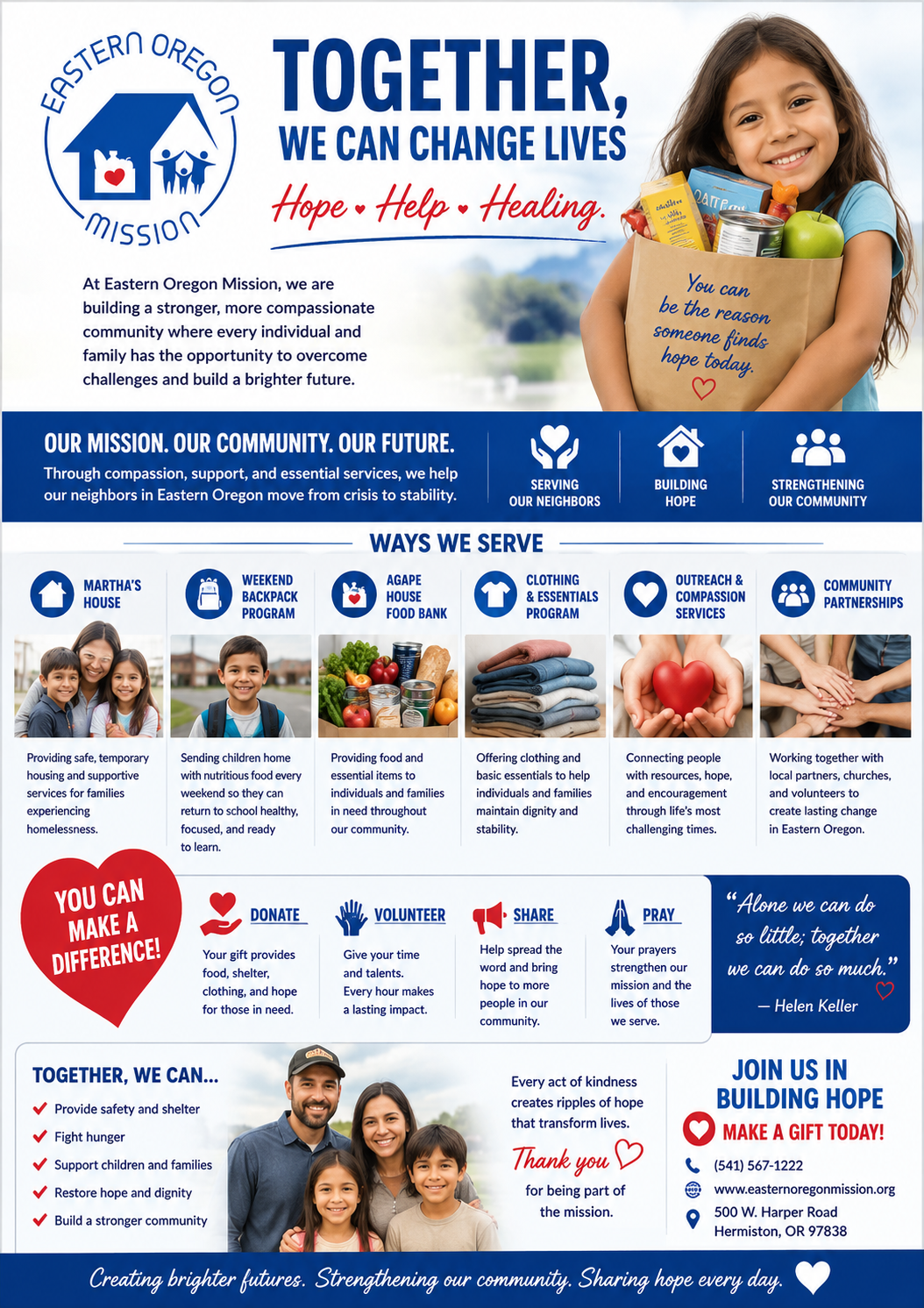
AGAPE HOUSE image

AGAPE HOUSE

"One mission, Let’s go together & put our Love in Action “

/ 150

Share:

"LOVE IN ACTION, SINCE 1986"

Agape House Food Bank/Pantry


Agape House opened its doors on August 5, 1986, as an outreach ministry of Eastern Oregon Mission, serving the community as both a resource center and food pantry. Today, the organization responds to significant and persistent need across Umatilla County and northern Morrow County, where approximately 37,441 residents live and an estimated 12.5% of individuals—roughly one in eight—experience food insecurity. Child food insecurity is even more severe, affecting approximately 18.4% of children, a rate higher than the statewide average and reflective of ongoing barriers to consistent access to nutritious food.


To help address childhood hunger, Agape House launched its Weekend Backpack Program in 2009. The program now serves more than 280 elementary students each week across 12 schools in five districts, including Hermiston, Umatilla, Echo, Stanfield, and Irrigon. Each participating child receives a backpack filled with 10–12 shelf-stable food items every weekend, ensuring they have access to meals when school cafeterias are closed.

Agape House operates as a community food bank and resource center providing free groceries, clothing, hygiene supplies, and essential household items to individuals and families facing hardship. The program serves approximately 200 households weekly and nearly 800 households each month, including working families, seniors, veterans, single parents, and individuals experiencing homelessness. Services are delivered through structured intake procedures, eligibility screening, culturally responsive distribution practices, and coordination with partner agencies to ensure food safety, equitable access, and responsible stewardship of resources.


In addition to food assistance, Agape House coordinates community outreach programs addressing hunger, homelessness, and poverty through partnerships and volunteer networks. Volunteers from churches, schools, businesses, and civic groups play a vital role in supporting operations and strengthening community connections. The organization also collects and distributes donated food, clothing, hygiene items, and household goods to assist local families and partner organizations.

To support individuals experiencing homelessness, Agape House also offers access to shower facilities for a small $1 fee. Through a partnership with Good Shepherd, shower vouchers are provided to ensure individuals in need have access to basic hygiene services.


Looking ahead, Agape House aims to expand its impact by increasing the number of individuals and families served by 25% within the next 12 months, with expanded outreach to rural and underserved communities. The organization also seeks to ensure that at least 60% of distributed food meets established nutritional guidelines and reflects diverse dietary needs. Additional goals include strengthening data collection and outcome tracking to improve accountability and better inform service delivery.

Community support is essential to sustaining and expanding these efforts. Donations of shelf-stable canned goods, refrigerated and frozen items, and fresh seasonal fruits and vegetables help ensure families continue to receive nutritious food. Community members can also help by advocating for the program—sharing information about available services with churches, businesses, schools, and local organizations so more individuals in need can access support.

The mission of Agape House is to provide a safe and supportive environment where families and individuals can stabilize their lives, access basic necessities, and move toward long-term self-sufficiency. Through compassion, practical support, and community collaboration, Agape House continues to serve as a vital safety net for vulnerable members of the community.

Those who wish to help can get involved by volunteering, donating, or partnering with the organization. Every contribution helps strengthen services and supports local families on their path toward stability and independence.